Pediatric Nurse Job Outlook and Salary: Will Pay Keep Growing?

See if you qualify for training programs
Answer a few questions in 2 minutes. Free, no commitment.
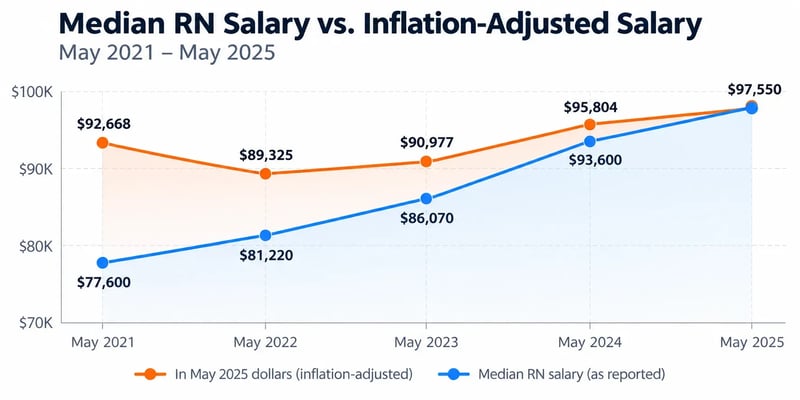
The Bureau of Labor Statistics (BLS) projects about 180,800 openings for registered nurses each year through 2035, and pediatric nurses compete for those jobs with the same RN license as every other specialty. BLS doesn't count pediatric nurses as a separate group, so the clearest baseline for a pediatric nurse salary is the median RN wage: $97,550 a year, or $46.90 an hour, in May 2025.
Whether that pay keeps rising depends on more than the nursing shortage. Pediatric demand also follows how many children are born and how many hospitals keep pediatric units open, and both have fallen since the late 2000s. To work in the specialty, you need an RN license first, and you can add the Certified Pediatric Nurse (CPN) credential once you meet its experience requirement, such as 1,800 hours of pediatric RN work within two years.
Pediatric Unit Closures
Hospitals have been consolidating children's inpatient care. The number of pediatric inpatient units in U.S. hospitals fell 29.9% from 2008 to 2022, from 1,749 to 1,226, and pediatric beds dropped 19.5%, according to a research letter in JAMA Pediatrics. Adult units declined just 4.4% over the same period.
Not every part of pediatrics shrank. The 2021 Pediatrics study found that PICU beds grew 16.0% from 2008 to 2018, even as beds on general pediatric inpatient units declined. That means a larger share of the remaining pediatric beds are intensive care beds, where nurses care for the sickest children.
Medicaid and Children's Hospital Finances
Medicaid and the Children's Health Insurance Program (CHIP) covered 35.0 million children and other CHIP members in June 2026, according to Medicaid.gov. The Children's Hospital Association reports that Medicaid covers about half of children's hospitals' patients, which ties those hospitals' budgets closely to Medicaid payment policy.
The 2025 budget reconciliation law changed several Medicaid rules, and the Congressional Budget Office estimated it would increase the number of uninsured people by 10 million in 2034, as summarized by KFF.
Children aren't subject to the law's new work requirement, which applies to adults ages 19 to 64 in the Medicaid expansion group, and parents or caretakers of children 13 and younger are exempt. Hospital finances could still shift as states put the changes in place.
How Pediatric Nurses Can Earn More
Pediatric nurses can raise their pay through credentials, specialty units, location, and advanced practice:
- Earn the CPN. The Pediatric Nursing Certification Board requires 1,800 hours of pediatric RN experience in the past 24 months, or at least five years as a pediatric RN with 3,000 pediatric hours in the past five years, including 1,000 in the past 24 months. The exam costs $309, and recertification is annual.
- Ask how employers reward certification. Pay bumps vary by employer, and in Nurse.com's 2024 salary report, 40% of nurses who earned a certification said it led to a raise.
- Move into a specialty unit. The PICU and pediatric emergency department are where Pediatric Advanced Life Support (PALS) training comes in, so check local job postings to see whether employers require it, and compare PALS classes near you.
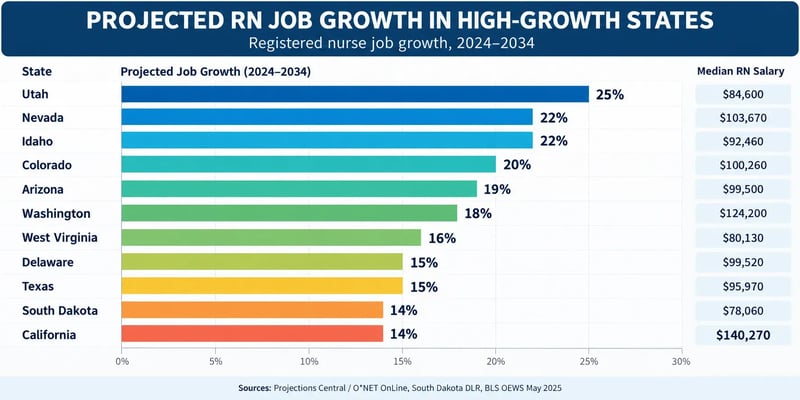
- Follow the pay map. California's RN median of $140,270 is the highest in the country, and Washington ranks among the top five at $124,200 while being projected to add RN jobs quickly.
- Become a pediatric nurse practitioner. NPs earned a median of $132,300 in May 2025, and BLS projects NP jobs to grow 41% from 2025 to 2035. About 3% of NPs hold their main certification in pediatrics, according to the American Association of Nurse Practitioners, and our breakdown of NP pay by experience shows how that salary grows over a career.
Frequently Asked Questions
How long does it take to become a pediatric RN?
You first need an RN license, which means finishing an approved nursing diploma, associate degree, or bachelor's degree program and passing the NCLEX-RN exam. After that, the standard CPN route requires 1,800 hours of pediatric RN work within 24 months, which is a little less than a year of full-time hours. Our guide on how long it takes to become a pediatric nurse lays out each stage.
Can you make $200,000 as a nurse?
Yes, in the highest-paying markets. In the San Jose metro area, the median RN salary was $216,740 in May 2025, and the San Francisco-Oakland-Fremont median was $186,610, according to BLS data published through O*NET. Nationally, the top 10% of RNs earned more than $137,470, so a $200,000 salary usually takes a high-wage metro, an advanced practice role, or extra shifts.
What kind of pediatric nurse makes the most money?
Advanced practice nurses earn the most. Nurse anesthetists earned a median of $236,590 in May 2025, and some specialize in pediatric anesthesia, while NPs as a group, including pediatric nurse practitioners, earned $132,300. Among bedside roles, BLS data shows government and hospital jobs paying the highest RN medians, at $110,780 and $100,220.
Is it hard being a pediatric nurse?
It can be. Pediatric nurses adjust medication doses and care plans for patients ranging from newborns to teenagers, explain treatment to worried parents, and care for seriously ill children. Our look at the pros and cons of pediatric nursing covers the daily demands in more detail.
Planning a Pediatric Nursing Career for the Long Run
Pediatric nurse salary growth rides on the broader RN market, which BLS expects to keep adding jobs through 2035, but the specialty has its own pressure points in birth rates, unit closures, and Medicaid funding. The pay levers you control are the ones that stay scarce: a CPN credential, experience in higher-acuity units, an advanced practice degree, and a willingness to work where states are projected to add nursing jobs fastest.
If you're still working toward your RN license, Dreambound lets you compare nursing programs by format, length, and location before you choose one.