Key Points
- The national median LPN salary is $64,400 a year, or $30.96 an hour, and the middle half of LPNs earn between $59,000 and $76,030 (BLS, May 2025).
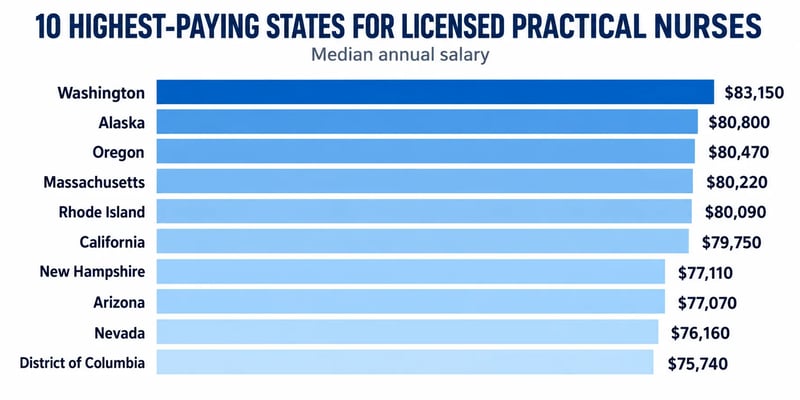
- Washington, Alaska, Oregon, Massachusetts, and Rhode Island have the highest LPN medians, each above $80,000, while Mississippi has the lowest at $50,220.
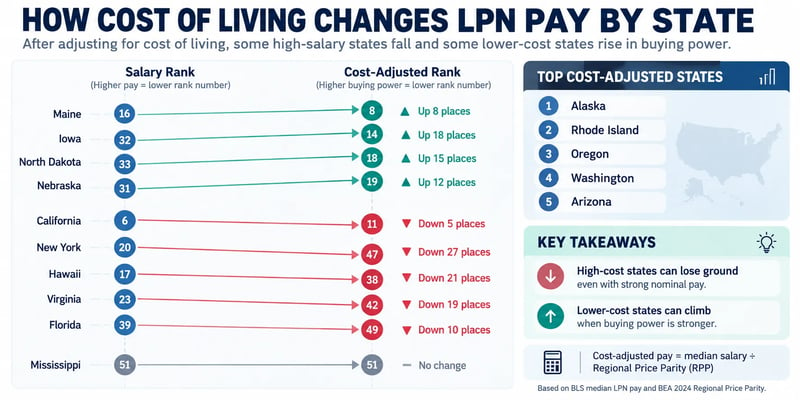
- Once prices are factored in, Alaska and Rhode Island move to the top of the list, and New York drops from 20th to 47th.
- San Jose and San Francisco are the best-paying metro areas, with LPN medians of $95,320 and $94,310.
- Becoming an LPN typically takes about a year in a state-approved program, followed by the NCLEX-PN licensing exam.

How Much Does a Licensed Practical Nurse Make?
A licensed practical nurse makes a median of $64,400 a year, based on BLS wage data for May 2025, and the median LPN hourly wage is $30.96. Half of all LPNs earn more than that and half earn less, which makes the median a better guide to typical pay than an average that a smaller group of high earners can pull upward.
Here is how LPN pay spreads out nationally, from the lowest 10% of earners to the highest 10%:
If you have seen $62,340 quoted as the LPN median, that figure comes from the May 2024 survey. Pay rose to $64,400 in the May 2025 release, which reports licensed vocational nurses in the same occupation as LPNs.
Demand is steady rather than fast-growing. LPNs held about 666,900 jobs in 2025, and BLS projects employment to grow 3% from 2025 to 2035, with about 51,800 openings a year. Many of those openings come from nurses who retire or move into other occupations.
LPN Pay by Work Setting
Work setting moves LPN pay too. Among the five largest settings, median pay differs by about $9,450 a year from top to bottom. Nursing homes and other residential care facilities employ more LPNs than any other setting, and they also pay more than hospitals:
- Nursing and residential care facilities: 37% of LPN jobs, median $68,020
- Hospitals: 16% of LPN jobs, median $61,160
- Home healthcare services: 12% of LPN jobs, median $63,580
- Offices of physicians: 11% of LPN jobs, median $59,520
- Government: 6% of LPN jobs, median $68,970
The gap between a nursing home and a hospital comes to about $6,860 a year at the median, which is worth weighing if you assumed hospital work pays the most.
Highest-Paying States for LPNs
Washington pays licensed practical nurses the most, with a median of $83,150 a year, or $39.98 an hour. The rest of the top 10 cluster on the Pacific Coast and in New England, with Arizona, Nevada, and the District of Columbia rounding out the list.
These figures also change how LPN pay compares with registered nursing. The LPN median in each of the top six states is higher than the median RN salary in Alabama ($77,080), Mississippi ($77,090), and South Dakota ($78,060), based on the same May 2025 BLS survey.
If Washington is on your list, the steps to become an LPN in Washington start with a state-approved program.
Lowest-Paying States for LPNs
Mississippi has the lowest LPN median in the country at $50,220 a year, or $24.14 an hour, followed by South Dakota at $52,750 and West Virginia at $55,360. Most of the bottom 10 are in the South and the Plains:
Lower pay in these states comes with lower prices. Seven of the 10 have overall price levels at least 10% below the national average, which is why several of them climb once cost of living is factored in.
A low state median does not cap LPN pay, either. In New Mexico, for example, the top 10% of LPNs earn more than $78,110 a year.
Licensed Practical Nurse Salary by State (All 50 States and DC)
Twenty-two states and the District of Columbia have LPN medians at or above the national figure of $64,400. The table below lists every state alphabetically, using BLS May 2025 wage data as published through O*NET's local wage tool.
How Cost of Living Changes LPN Pay by State
Adjusted for cost of living, Alaska offers LPNs the strongest pay in the country, with Rhode Island, Oregon, and Washington close behind.
To compare buying power, each state's median was divided by its 2024 Regional Price Parity, the latest state price index from the U.S. Bureau of Economic Analysis (BEA). An index of 110 means prices run 10% above the national level, so California's $79,750 median (index 110.7) buys roughly what $72,000 would at average U.S. prices. Rankings include all 50 states and DC.
The adjustment moves some states a long way. High prices pull several well-known markets down the list:
- New York falls from 20th to 47th.
- Florida falls from 39th to 49th, because its prices sit above the national level while its LPN median sits below it.
- Hawaii falls from 17th to 38th, and Virginia from 23rd to 42nd.
- California slips from sixth to 11th.
Lower prices lift others:
- Iowa rises from 32nd to 14th.
- North Dakota rises from 33rd to 18th, and Nebraska from 31st to 19th.
- Maine rises from 16th to eighth.
Mississippi stays last before and after the adjustment.
Keep two limits in mind. BEA notes that rents are a major reason prices differ between states, so your own housing costs matter more than any index. The index is also statewide, which means a city like San Francisco or New York costs more than its state figure suggests.
Top-Paying Metro Areas for LPNs
San Jose-Sunnyvale-Santa Clara, California, is the top-paying metro area for LPNs, with a median of $95,320 a year, or $45.83 an hour. All 10 of the highest-paying metros are on the West Coast, and five of them are in Northern California:
The Bay Area explains why California ranks sixth among states yet holds the top three metros. In Los Angeles and San Diego, LVN medians of $79,310 and $79,720 sit close to the state figure of $79,750.
Self-reported pay lines up with these numbers. In an early 2026 discussion on r/LPN_LVN_Community, California LVNs reported hourly rates from about $36 at a subacute unit in the Inland Empire to $46 at a rural hospital in central California.
California employers with 15 or more employees must include a pay scale in job postings under Labor Code Section 432.3, so you can compare local offers before you apply. For the licensing steps, see how to become an LVN in California.
Here is how some of the largest metros outside the West Coast compare:
- Phoenix-Mesa-Chandler, AZ: $78,080 ($37.54 an hour)
- Chicago-Naperville-Elgin, IL-IN: $78,070 ($37.54 an hour)
- New York-Newark-Jersey City, NY-NJ: $75,910 ($36.50 an hour)
- Dallas-Fort Worth-Arlington, TX: $64,370 ($30.95 an hour)
- Houston-Pasadena-The Woodlands, TX: $63,670 ($30.61 an hour)
If these numbers point you toward a particular state or city, Dreambound lets you compare practical nursing programs by location, format, and length before you settle on one.
How LPNs Raise Their Pay
Location sets the baseline for LPN pay, but several other choices change what you take home once you are licensed:
- Overtime: Under federal law, covered nonexempt employees earn time and a half for hours over 40 in a workweek. California also requires daily overtime after 8 hours in a workday and double time after 12.
- Per diem and private duty: In a spring 2026 r/nursing thread, a new-graduate LPN in North Carolina reported $30 an hour in a hospital and $34 in pediatric private duty. A Pennsylvania LPN in the same thread said per diem shifts averaged just over $40 an hour.
- Certifications: BLS lists optional certifications in gerontology, wound care, and IV therapy, and some employers require or prefer CPR or basic life support certification.
- Nonbedside roles: Another LPN in that thread reported $103,000 a year as a minimum data set (MDS) coordinator at a New Jersey nursing home after 10 years in the field.
- Registered nursing: RNs earned a median of $97,550 in May 2025, about $33,150 more than LPNs, and BLS notes that LPN-to-RN programs offer a route into the role. The registered nurse salary guide breaks RN pay down by state and setting.
The forum figures are individual reports rather than survey data, so treat them as examples of how pay varies, not as offers any employer will match.
LPN Programs on Dreambound
Dreambound puts practical and vocational nursing programs from partner schools side by side, so you can check format and length against the state where you plan to work. The five programs below are in Las Vegas; Woodland Park, New Jersey; Rockford, Illinois; San Antonio; and North Charleston, South Carolina, states where LPN medians run from $61,820 to $76,160.
- Format: In person
- Length: From 15 months
- Graduates may transfer into the college's Associate of Applied Science in Nursing program with advanced placement and finish the RN degree in one additional year
- Format: In person
- Includes on-site labs and clinical rotations